Thanks to:
- Kevin Knight, english version, construction of the digital pin-hole camera.
- Alexis Amen, programming.
- Grégo Chatonsky for "The revolution took place in NY".
- People who helped me take all the pictures: Rozen Adreatta, Joelle Bitton, Anne Gendrin, Isabelle Klots, Maja Korac, KRN, Nige & Lynn Hilyers, Odile Landry, Guy Prévost & Niki Prévost, Elias, Emma, Théo, Laini Nemett, Barry Nemett, Jean-Marc Michaud, Nilda Seyffert & Robert Seyffert, Pierre Cochard & the students of Lorient Fine Art School...
- Hidrazone, for commission.
• Behind Memory:
The starting point for Behind Memory is a simple acknowledgement: on a computing machine, images exist (and can be accessed) because of their index, words that define them. It is then true to say that behind each word on my computer desktop lies an image.
Random Access Memory’s natural development looks at the relationship between image and text. (gen-narrative (generative+narrative). Behind Memory’s aim is to unveil these images hidden behind the “Through the Looking Glass” dyslexic generator’s text. The first step is to literally embed images into text.
• Image & text:
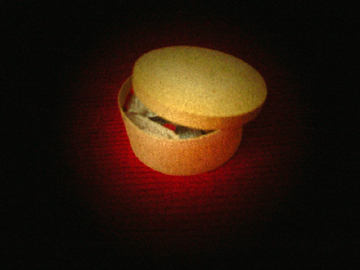
As in RAM, Behind Memory will create sentences from the book “Through the Looking Glass”. The sentence is analysed, and the first word found matching indexes from a category of images in the database is applied to the letter formation. An example being “like a tea tray”, the first matching word is “tea, so the program will select a random image from the tea category and used it for that sentence. It is important to note that random here is used in a more controlled way than it is in RAM: I didn’t want to make the choice of using randomness as a non-choice (I let the computer choose for me) but instead to work with randomness at the very end of the application process for a specific task (choosing the image). Therefore creating a richer narrative, that userswill be happy to see “again and again”.
I have picked over 350 words that are most used and will break them down into categories. Each comprising a minimum of 5 images, allowing the visual story to be as varied as possible.
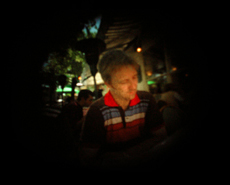
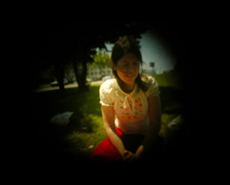
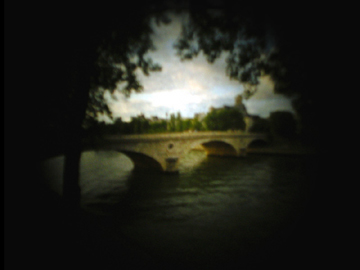
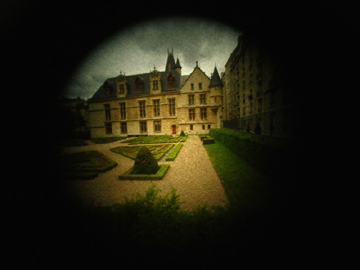
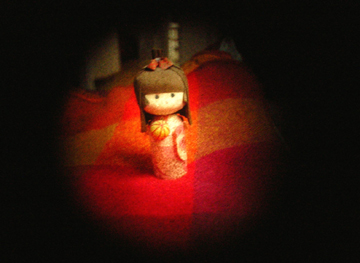
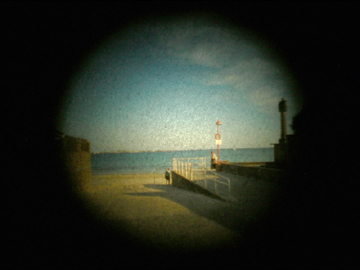
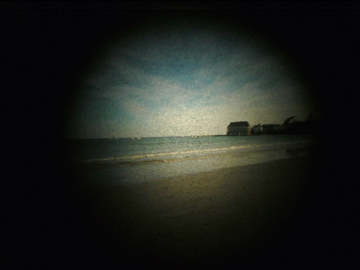
The decision on how to produce the images was influenced by the atmosphere of the original text. I decided to building a Camera Obscura using a digital camera for practicality. This very Victorian apparatus (even though camera obcura have been around since the 16th Century*) has the property of inverting the captured image and seemed both funny and obvious at the same time.
Technical matters:
To view Behind Memory, you will need a 512k, at least, and to have the latest Shockwave player.
Research for the production of images:
- Pinhole camera :
http://www.pinhole.cz/en/pinholecameras/
- On camera obscura :
http://www.snarkout.org/archives/2004/01/21/
http://brightbytes.com/cosite/portable.html
- Book for thoughts: Techniques of the Observer, Jonathan Crary...
|